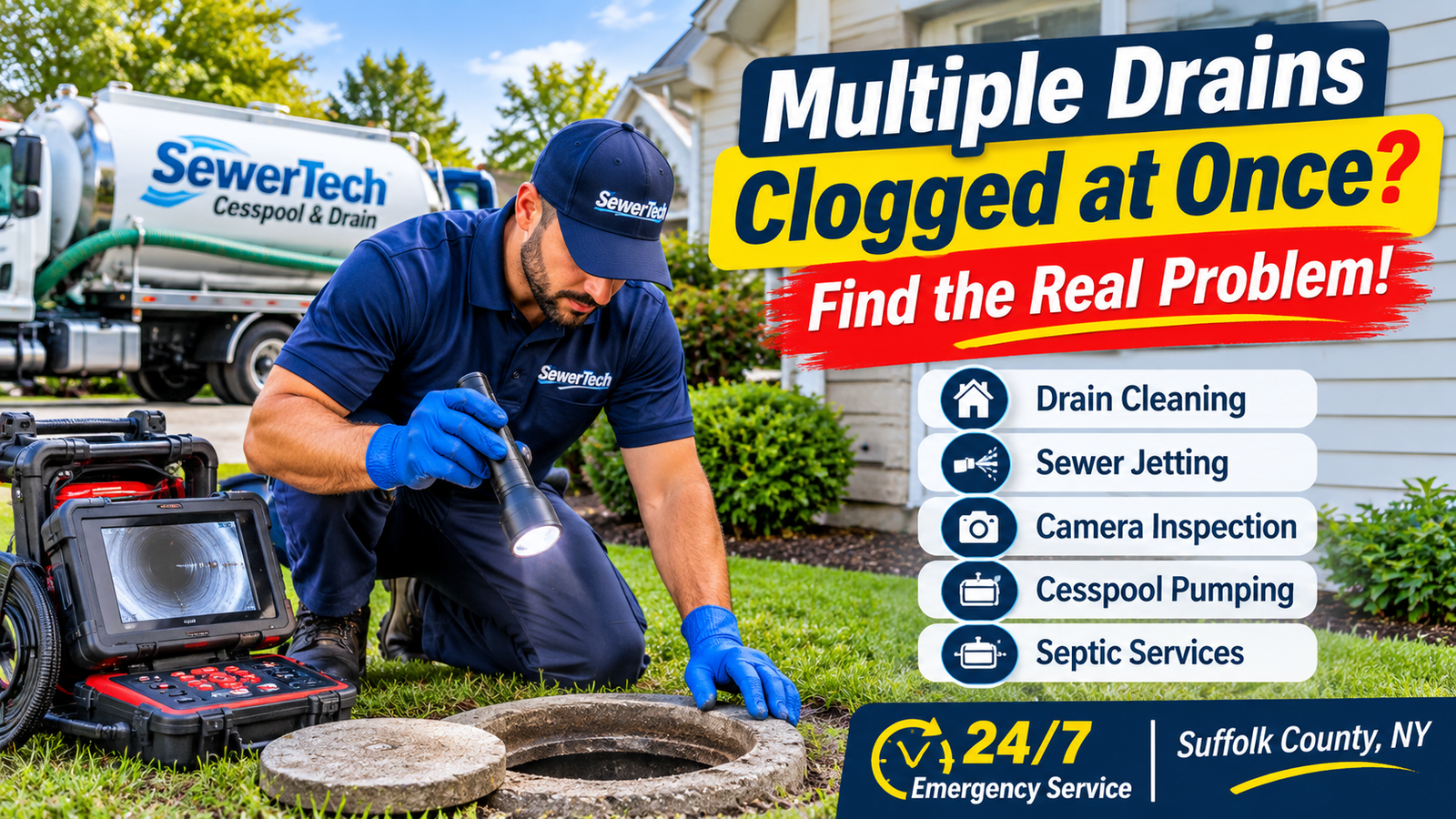
You notice that the kitchen sink is draining slowly. Then the bathtub starts holding water, and the toilet begins making a strange gurgling sound. At first, it might seem like several unrelated plumbing problems. But when multiple drains start acting up around the same time, the cause may be deeper in your home’s drainage system.
For homeowners in Suffolk County, NY, the problem could involve a blockage in the main drain line, a sewer pipe obstruction, or an overloaded cesspool or septic system. The symptoms can look similar, but each problem may require a different solution.
Understanding what to look for can help you recognize when a minor drain issue needs attention and when it is time to call a professional. SewerTech Cesspool & Drain provides drain cleaning, sewer jetting, camera inspections, cesspool pumping, and septic services throughout Suffolk County.
What Does It Mean When Multiple Drains Clog at the Same Time?
When only one sink or shower drains slowly, the blockage may be limited to that fixture or its branch pipe. However, when several fixtures stop draining properly, the problem may affect a shared section of your home’s drainage system.
Your sinks, tubs, toilets, and other plumbing fixtures connect to a network of drainpipes. Wastewater eventually travels through the main drain line toward the property’s sewer connection or onsite wastewater system.
A blockage farther along this route can interfere with drainage throughout the house.
Common warning signs include:
- Water draining slowly from several sinks, tubs, or showers.
- Toilets gurgling when another fixture is used.
- Water rising in a bathtub or shower when a toilet is flushed.
- Wastewater appearing in a basement floor drain.
- Recurring clogs that return after temporary clearing.
- Unpleasant sewage odors inside the home or around the yard.
These symptoms do not automatically mean your cesspool is full. A professional diagnosis can help determine whether the problem is in an individual drain, the main line, or the wastewater system.
5 Possible Reasons Multiple Drains Are Clogged
1. A Blockage in the Main Drain Line
Your main drain line carries wastewater away from the home’s plumbing fixtures. When grease, debris, wipes, or other materials accumulate in the pipe, wastewater may have difficulty passing through.
Because multiple fixtures depend on this line, a blockage can affect more than one room.
What you may notice: Several drains become slow, toilets gurgle, or water backs up through the lowest available drain.
Professional drain cleaning services in Suffolk County can help address drain blockages. If the obstruction is deeper in the line, additional inspection may be necessary to identify the right solution.
2. Your Cesspool May Be Reaching Capacity
If your home uses a cesspool, accumulated waste and reduced drainage performance can contribute to wastewater backing up into the plumbing.
A cesspool that needs service may be associated with slow drains, sewage odors, recurring backups, or unusually wet ground near the system. However, these symptoms can also indicate other problems.
Pumping may help when accumulated waste is the cause, but it will not repair a damaged pipe or resolve every drainage failure.
Learn more about professional cesspool pumping in Suffolk County and when to schedule service.
3. Tree Roots or Damage Inside a Pipe
Tree roots can enter sewer or drain pipes through existing cracks or loose joints. As roots grow, they can restrict wastewater flow and trap debris.
Older underground pipes may also develop cracks, displaced joints, or collapsed sections. These problems can cause recurring blockages even after a drain has been cleared.
If the same drainage problem keeps returning, it is worth finding out whether the pipe itself is damaged rather than repeatedly treating the symptoms.
A sewer camera inspection can help locate visible obstructions and assess the condition of accessible pipe interiors without immediately digging up the yard.
4. A Septic System Problem
Homes with septic systems can experience drainage problems when the tank, outlet components, or other system parts are not functioning properly.
For example, a tank that needs pumping, a blocked component, or a system that cannot accept wastewater properly may contribute to backups.
The symptoms can resemble a main drain blockage, so it is important not to assume that pumping alone will solve the issue.
If your home uses a septic tank, SewerTech’s septic pumping service can help with routine maintenance. When a malfunction is suspected, the system may need further evaluation or septic system repair.
5. A Severe Buildup Inside the Drain or Sewer Pipe
Grease, soap residue, hair, food particles, and other debris can gradually narrow drainpipes. In some cases, ordinary household use allows buildup to accumulate until water can no longer flow freely.
If a blockage is substantial or keeps returning, high-pressure sewer jetting may be appropriate for the pipe and obstruction involved.
Sewer jetting services use specialized equipment to help remove certain types of buildup from compatible pipes. A technician should determine whether jetting is suitable for the pipe’s condition and the type of blockage.
How Can You Tell Whether It’s a Drain Clog or a Cesspool Problem?
The location and pattern of the symptoms can offer clues, although they cannot confirm the cause on their own.
| What you notice | Possible explanation |
|---|---|
| Only one sink drains slowly | A localized fixture or branch-line clog |
| Several fixtures drain slowly | A shared drain-line blockage or wastewater-system problem |
| Toilet gurgles when a tub or sink drains | A possible drainage or venting issue |
| Sewage backs up through a basement floor drain | A potentially serious main-line or wastewater-system problem |
| Wet ground or sewage odors near the cesspool | A possible cesspool or system malfunction |
| The same clog keeps returning | Persistent buildup, roots, pipe damage, or an unresolved system problem |
The key is to identify where wastewater flow is being restricted. Guessing incorrectly can lead to unnecessary work or a temporary improvement without addressing the underlying issue.
What Should You Do When Multiple Drains Stop Working?
If wastewater is backing up into your home, treat the situation seriously.
Stop using water. Avoid flushing toilets, running showers, doing laundry, or operating the dishwasher until the cause is assessed. Additional wastewater can make an existing backup worse.
Keep people and pets away from sewage. Wastewater can contain harmful microorganisms. Avoid direct contact, and do not attempt to clean contaminated areas without appropriate precautions.
Do not open or enter a cesspool or septic tank. These systems can contain dangerous gases and other serious hazards.
Avoid repeatedly pouring chemical drain cleaners into the plumbing. They may not reach the actual obstruction, and some products can create hazards during subsequent service.
Contact a qualified service professional. Explain which fixtures are affected, when the problem began, whether wastewater has backed up, and whether your property uses a cesspool or septic system.
If sewage is entering the home, seek prompt professional assistance. SewerTech provides 24/7 emergency septic, cesspool, sewer, and drain services throughout Suffolk County.
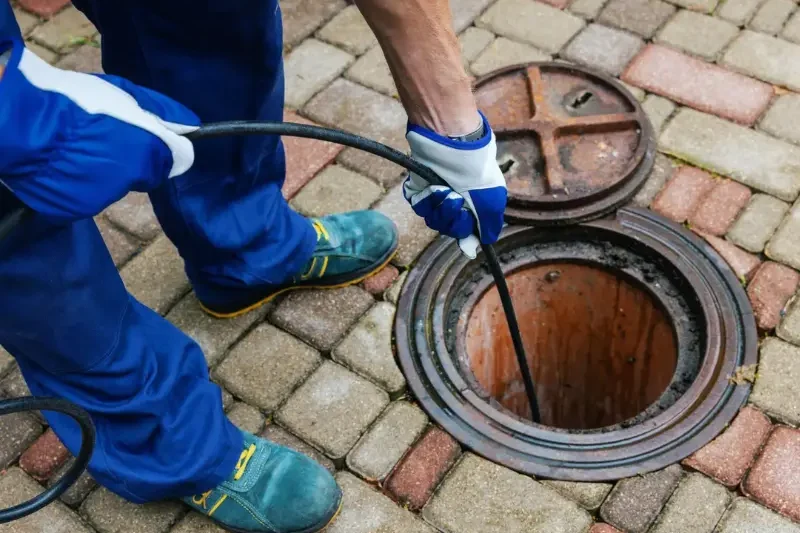
How Professionals Find the Source of a Drainage Problem
The right repair begins with identifying the actual cause rather than assuming every backup requires pumping.
Inspecting the Symptoms
A technician can ask which fixtures are affected, whether the issue occurs throughout the house, and whether there are signs of a wastewater-system problem.
Checking the Drainage Line
Depending on the symptoms and access points, the technician may evaluate the drain line to determine whether a blockage or other obstruction is present.
Using a Sewer Camera When Appropriate
A camera inspection can help identify visible roots, debris, cracks, or other pipe problems. This information can guide decisions about cleaning, repairs, or additional investigation.
Choosing the Appropriate Service
Once the cause is better understood, the recommended work may involve drain cleaning, sewer jetting, cesspool pumping, septic service, or pipe repair. Not every situation needs every service.
The goal is to address the source of the problem and reduce the likelihood of the same symptoms returning.
How Can You Reduce the Risk of Recurring Drain Problems?
Although not every blockage can be prevented, sensible habits can reduce unnecessary strain on your plumbing and wastewater system.
- Keep grease, cooking oil, wipes, and other unsuitable materials out of household drains.
- Use strainers to catch hair and food particles where appropriate.
- Avoid flushing products other than human waste and toilet paper.
- Address recurring slow drains before they develop into a larger backup.
- Keep records of cesspool pumping and septic maintenance.
- Arrange professional inspection when drainage problems repeatedly return.
The appropriate maintenance schedule depends on your system type, household water use, system condition, and professional recommendations. There is no single schedule that fits every property.
Why are all my drains clogged at once?
Multiple clogged drains may indicate a blockage in a shared drain line, a main-line obstruction, or a problem with your cesspool or septic system. A professional assessment can help distinguish between these causes.
Does a full cesspool cause multiple drains to back up?
It can. When a cesspool or wastewater system cannot accept additional wastewater properly, plumbing backups may occur. However, a blocked drain line or another system malfunction can produce similar symptoms.
Should I get my cesspool pumped if several drains are slow?
Not automatically. Pumping may help if accumulated waste is contributing to the problem, but it will not clear every pipe blockage or repair damaged plumbing. The cause should be assessed before choosing a service.
When is a sewer camera inspection useful?
A camera inspection may be useful when blockages recur, a pipe may be damaged, or the source of a sewer-line problem is unclear. Whether it is appropriate depends on the system and access available.
Is sewage backing up into the basement an emergency?
Yes. Treat sewage entering the home as an urgent sanitation problem. Stop using water, keep people and pets away from contaminated areas, and contact a qualified professional promptly.
Does SewerTech serve homeowners throughout Suffolk County?
SewerTech Cesspool & Drain provides residential and commercial cesspool, septic, sewer, and drain services throughout Suffolk County, NY, including emergency service.
Get Help With Recurring Drain Problems in Suffolk County, NY
When several drains stop working properly, clearing one sink may not be enough. The underlying problem could be farther down the main drain line or connected to your property’s wastewater system.
SewerTech Cesspool & Drain helps Suffolk County property owners investigate drainage problems and determine which service is appropriate, from drain cleaning and sewer jetting to camera inspections, cesspool pumping, and septic system repairs.
If your drains are repeatedly clogging, several fixtures are backing up, or sewage is entering your home, contact SewerTech at for professional assistance.
Early assessment can help you understand what is happening and avoid unnecessary guesswork.